By Dr Ash Cox, PhD
When most people hear the word creatine, they immediately think of bodybuilders, gym-goers and elite athletes chasing bigger lifts and faster sprint times.
That reputation isn’t entirely undeserved.
Creatine is one of the most effective sports nutrition supplements ever studied, with decades of research demonstrating improvements in strength, power, training capacity and recovery. However, limiting creatine to the world of sport is like describing a smartphone as simply a device for making phone calls.
Science has moved on.
Today, researchers are investigating creatine’s role in healthy ageing, cognitive performance, rehabilitation, clinical populations, metabolic health and quality of life. What has become increasingly apparent is that creatine is not simply a muscle supplement; it is a cellular energy supplement.
And that matters because every cell in your body requires energy.
What Is Creatine?
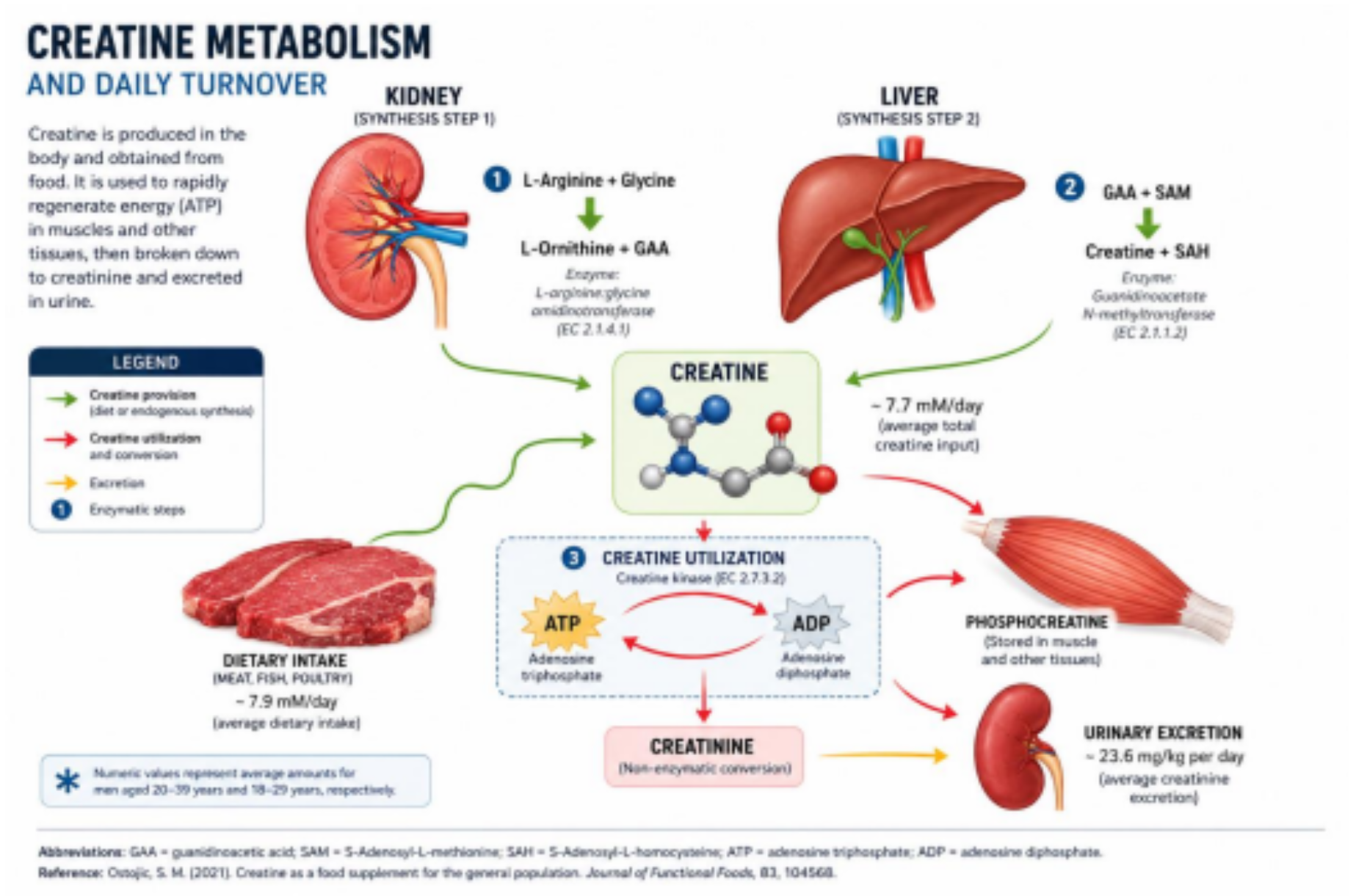
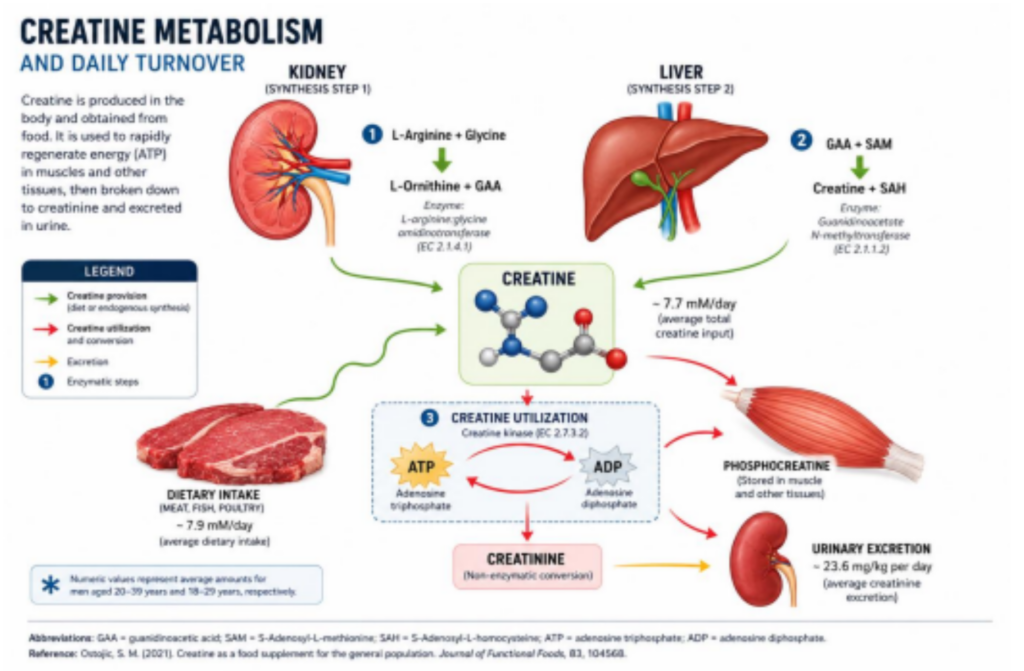
Creatine is a naturally occurring compound synthesised within the body from the amino acids glycine, arginine and methionine. It can also be obtained through dietary sources, primarily red meat,
fish and poultry. Approximately 95% of the body’s creatine stores are found within skeletal muscle, with the remaining 5% distributed throughout tissues such as the brain, liver and kidneys.¹
Its primary role is to support the rapid regeneration of adenosine triphosphate (ATP), the body’s immediate energy currency.
Whenever energy demand suddenly increases, whether during a heavy squat, a sprint, a demanding day at work, a late-night feed with a newborn or a complex cognitive task, ATP is rapidly consumed. Creatine acts as an energy buffer, helping replenish ATP and maintain cellular function.
This is why creatine’s effects extend far beyond the gym floor.
Are We Getting Enough Creatine?
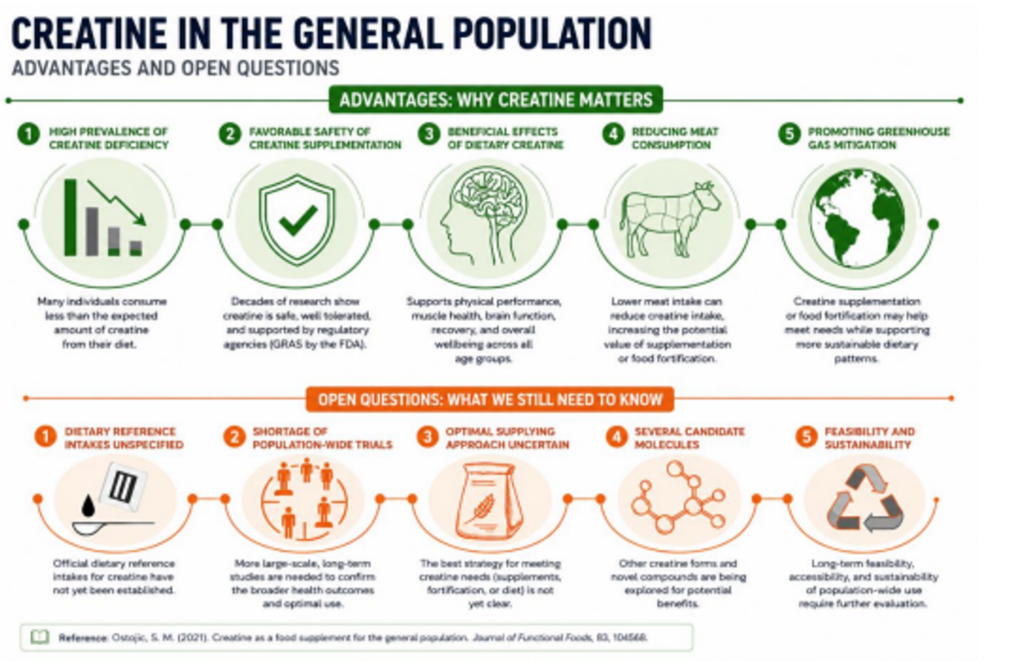
An average adult requires approximately two grams of creatine each day. Roughly half is produced naturally within the body, while the remainder is typically obtained through diet.¹
Historically, this was unlikely to be problematic.
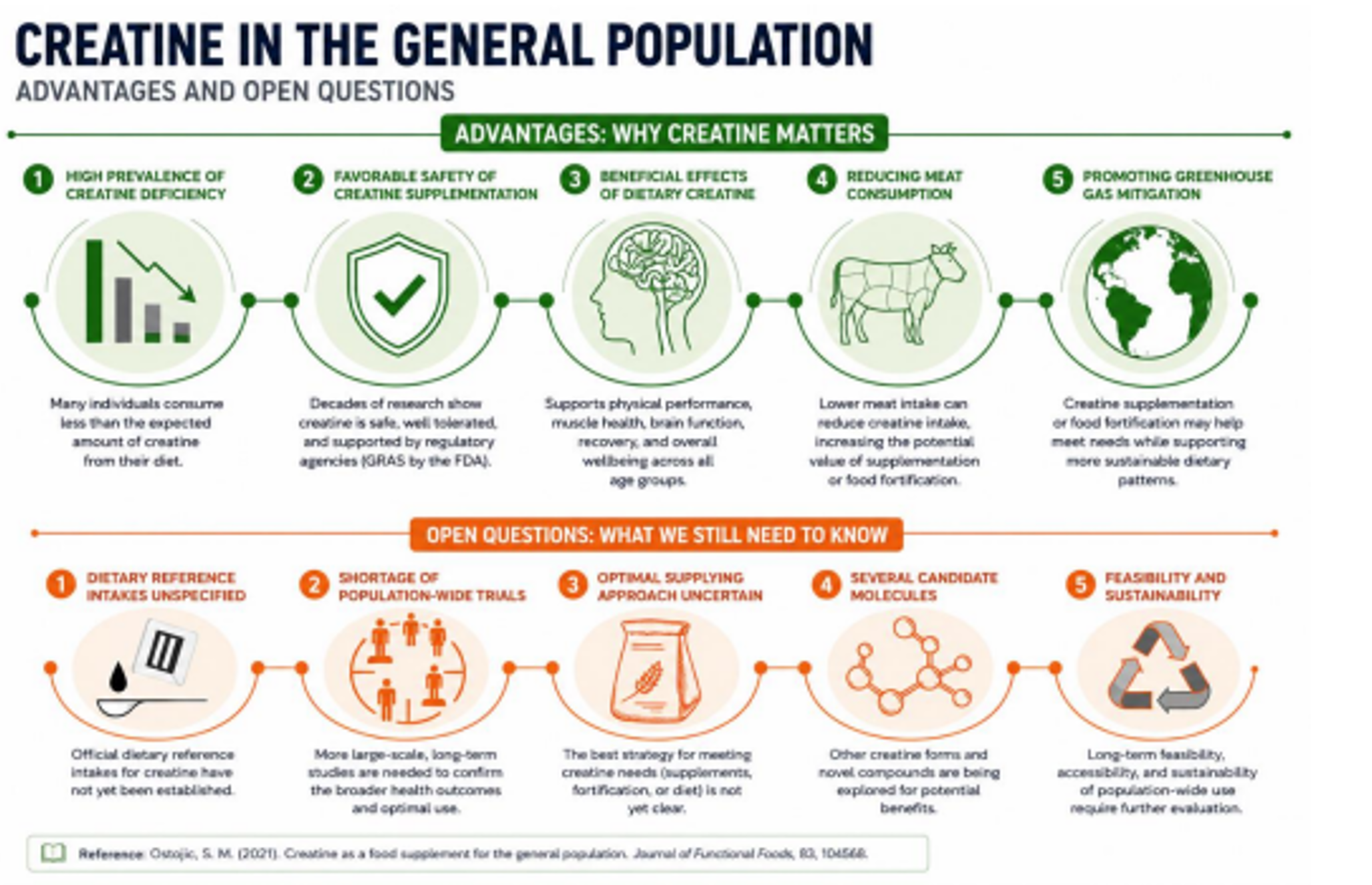
However, recent population-level analyses suggest creatine intake may be substantially lower than expected across many groups. Data from the United States National Health and Nutrition Examination Survey (NHANES) found average dietary creatine intake was significantly below anticipated levels, with large proportions of adults and children consuming less than one gram per day.¹
This becomes particularly relevant for:
– Vegetarians and vegans
– Older adults
– Individuals reducing meat intake
– People with high physical demands
– Those exposed to prolonged cognitive stress
– Individuals recovering from illness or injury
Whilst the body can synthesise creatine, dietary intake remains an important contributor to total creatine availability.
Creatine and Physical Performance
The performance benefits of creatine are among the most robust findings in sports nutrition.
Supplementation increases intramuscular phosphocreatine stores, improving the body’s ability to regenerate ATP during high-intensity activity. This allows athletes and active individuals to perform more work, recover more effectively between efforts, and accumulate a greater training stimulus over time.²
The practical outcome is simple:
– Increased strength
– Increased power output
– Improved sprint performance
– Greater training quality
– Enhanced recovery between efforts
These benefits explain why creatine remains one of the most widely used supplements among elite athletes, military personnel and tactical operators worldwide.
The Brain Runs on Energy Too
Perhaps the most exciting area of modern creatine research lies outside of sport.
The brain represents approximately 2% of total body mass but consumes around 20% of the body’s energy at rest. As a result, maintaining adequate energy availability is critical for cognitive performance.
Research suggests that creatine supplementation may improve cognitive performance under demanding conditions, including sleep deprivation, mental fatigue, and sustained cognitive effort. Studies have also reported improvements in memory and cognitive processing, particularly in individuals with lower baseline creatine availability, such as vegetarians.¹
This has important implications for:
– Students
– Shift workers
– Busy professionals
– Parents
– Emergency service personnel
– Military operators
In many ways, modern life places significant cognitive demands on us. Creatine may help support the energetic systems underpinning those demands.
Healthy Ageing and Longevity
One of the most significant challenges associated with ageing is the gradual loss of muscle mass, strength and physical function.
This process, known as sarcopenia, contributes to falls, frailty, loss of independence and reduced quality of life.
A growing body of evidence demonstrates that creatine supplementation, particularly when combined with resistance training, can enhance gains in muscle mass and strength in older adults.² These improvements may help preserve physical function and support healthy ageing.
For this reason, many researchers now view creatine as more than a performance supplement. It is increasingly being discussed as a longevity and healthy ageing intervention.
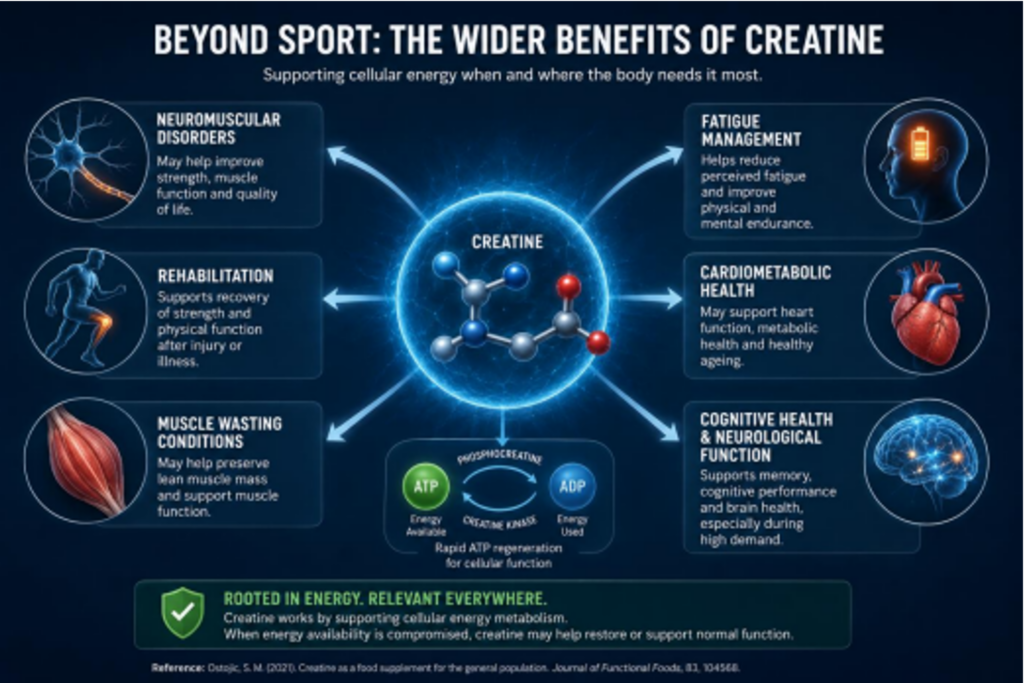
Beyond Sport: Clinical Applications
Although research remains ongoing, creatine has demonstrated promise across a variety of clinical settings.
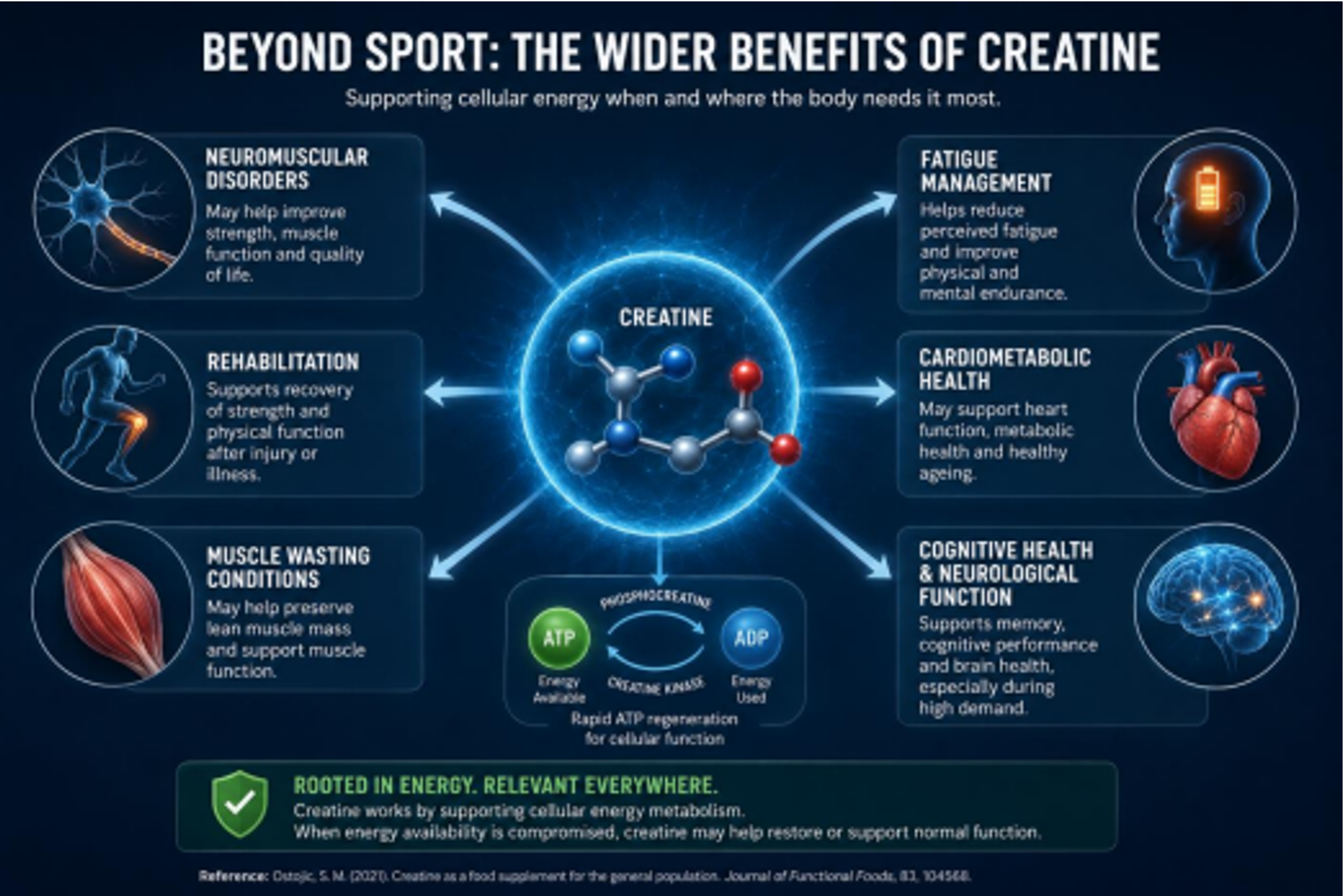
Studies have reported beneficial effects relating to:
– Neuromuscular disorders
– Rehabilitation
– Muscle wasting conditions
– Fatigue management
– Cardiometabolic health
– Cognitive health and neurological function¹
Importantly, many of these benefits appear to stem from creatine’s fundamental role in cellular energy metabolism.
When energy availability becomes compromised, creatine may help restore or support normal function.
Is Creatine Safe?
Few supplements have undergone the level of scrutiny applied to creatine.
More than three decades of research have consistently demonstrated an excellent safety profile when consumed at recommended dosages.²
Despite persistent myths, current evidence does not support claims that creatine:
– Damages healthy kidneys
– Causes dehydration
– Increases muscle cramping
– Causes hair loss
– Acts as an anabolic steroid²
In 2020, creatine monohydrate was recognised by the U.S. Food and Drug Administration (FDA) as Generally Recognised As Safe (GRAS).¹
For healthy individuals, creatine remains one of the safest and most thoroughly researched supplements available.
How Much Should You Take?
The good news is that creatine supplementation is remarkably simple.
For most individuals:
3–5 g per day of creatine monohydrate
is sufficient to maximise muscle creatine stores over time.²
Whilst loading protocols can accelerate saturation, they are not required. Consistent daily supplementation achieves the same outcome with fewer gastrointestinal issues and greater convenience.
The Bottom Line
Creatine has spent decades being viewed through the narrow lens of sport performance. The science now tells a much bigger story.
Creatine supports cellular energy production throughout the body. It has demonstrated benefits for physical performance, recovery, muscle preservation, cognitive function and healthy ageing. It is affordable, well-researched, highly effective and exceptionally safe.
Whether you are an athlete chasing performance, a parent juggling competing demands, a professional seeking mental sharpness, or simply someone interested in maintaining health and function as you age, creatine deserves serious consideration.
In a supplement industry often dominated by hype, creatine remains something increasingly rare: A product supported by decades of high-quality scientific evidence.
References
1. Ostojic SM. Creatine as a food supplement for the general population. Journal of Functional Foods. 2021.
2. Antonio J, Candow DG, Forbes SC, et al. Common questions and misconceptions about creatine supplementation: what does the scientific evidence really show? Journal of the International Society of Sports Nutrition. 2021.
3. Kreider RB, Kalman DS, Antonio J, et al. International Society of Sports Nutrition position stand: safety and efficacy of creatine supplementation in exercise, sport and medicine. Journal of the International Society of Sports Nutrition. 2017.
4. Candow DG, Forbes SC, Chilibeck PD, Cornish SM, Antonio J, Kreider RB. Variables influencing the effectiveness of creatine supplementation as a therapeutic intervention for sarcopenia. Frontiers in Nutrition. 2019.